
OneDrive Icons explained: What the blue cloud, green check, and solid check really mean
Updated: November 23, 2025


I rely on Microsoft OneDrive every day for both personal and work files. Along the way, I learned that seeing those tiny icons following files and folders in File Explorer can be confusing. This guide — OneDrive Icons explained — breaks down what those icons mean, how space is counted between the cloud and your PC, and exactly how to free up local hard drive space without losing access to your files.
Microsoft OneDrive is a cloud storage service that lets you store, access, and share files online. Here’s a quick breakdown of what it offers:
✅ Key Features of OneDrive
- File Storage in the Cloud: Save documents, photos, videos, and other files securely online.
- Access Anywhere: Use OneDrive on any device—PC, Mac, mobile, or web browser.
- Sync Across Devices: Changes you make to files are automatically updated everywhere.
- Collaboration: Share files or folders with others and work together in real time (especially with Microsoft 365 apps like Word, Excel, and PowerPoint).
- Backup & Security: Protect files with encryption and version history, and restore previous versions if needed.
- Integration: Built into Windows and works seamlessly with Microsoft 365.
Table of Contents
- How OneDrive storage numbers relate to your PC
- The three OneDrive icons explained for files
- The blue icon
- Green tick icons or green check mark
- Green check vs solid green circle difference
- How the icons behave for folders
- Practical steps to free up local disk space
- Files on Demand: the setting behind those icons
- Quick tips and common scenarios
- Closing thoughts
- Frequently asked questions
How OneDrive storage numbers relate to your PC
There are two storage numbers you should understand. One is the total storage in your OneDrive account (for many accounts, that is 1 TB or 1024 GB). The other is the amount of OneDrive content actually stored on your computer, under Size on disk.
 Chris Menard
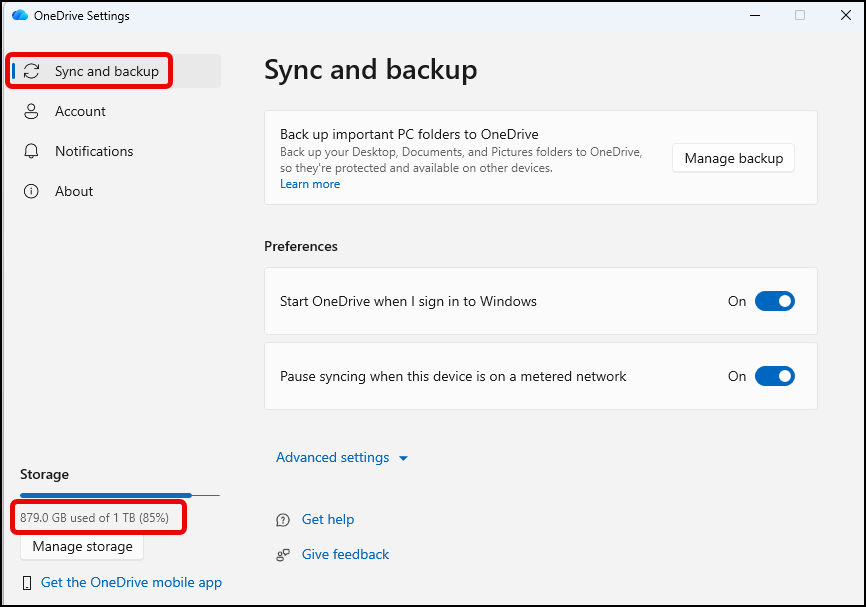
To check OneDrive storage: Right-click your OneDrive icon, and choose Settings. Click Sync and backup if needed. The account storage value shows the total OneDrive space (1 TB) and how much I have used (879 GB).
- The blue cloud icon in the system tray is OneDrive for Work or School
- The gray cloud icon in the system tray is OneDrive personal
- You may not have both

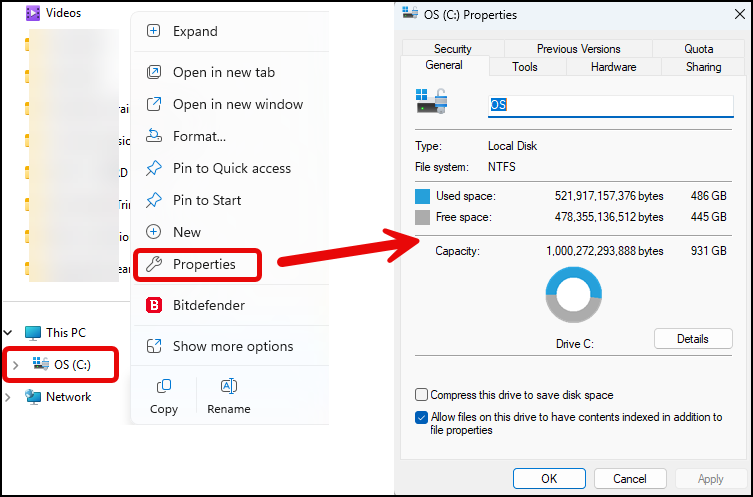
Check local computer storage - open File Explorer (Win key + E), right-click your C drive, and click Properties. You will see a pie chart, and your storage is listed above it.
What can I do with OneDrive Files On-Demand?
1. Make files online only, which saves space on your computer. 2. Files and folders can always be available on your computer or mobile device 3. See if files are shared.
OneDrive files are stored in the Cloud. What is the Cloud?
"The cloud" is an extensive network of remote servers worldwide, tied together to operate as a single ecosystem. These servers have multiple purposes. Servers do the following:
- Servers store and manage data and run applications - Servers deliver content such as streaming videos for Amazon Prime Video, Hulu, Disney, Apple, and Netflix. - Servers provide our webmail and office applications
YouTube Video on OneDrive sync icons and storage space
OneDrive - Sync Icons Explained for files and folders
The three OneDrive icons explained for files
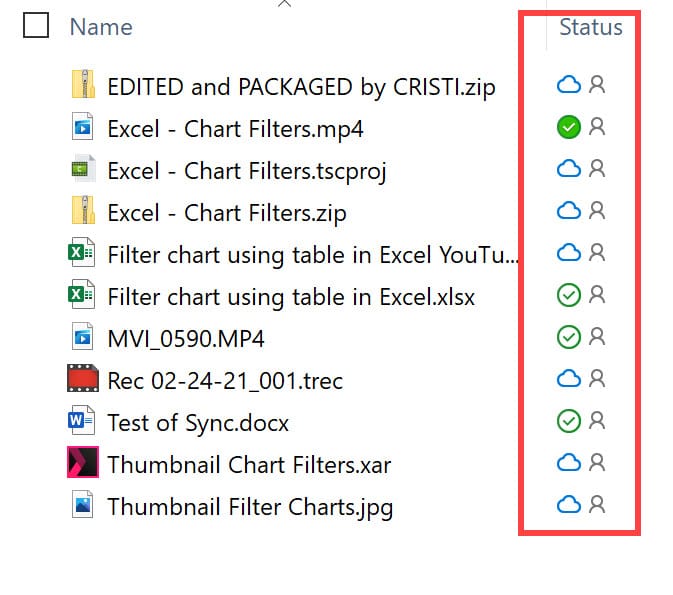
When Files on Demand is enabled, you’ll see three main icons following files in File Explorer. I call these out often because they directly affect whether a file consumes local disk space and whether you can open it offline.
- Blue cloud — file is online-only. The file is stored in OneDrive and not on your PC. No local disk space is used. If you do not have internet access, you cannot open that file.
- Green checkmark (outlined) — file is locally available and synced to the cloud. You can open it offline, and it counts against your disk space.
- Solid green circle with white check — file is marked Always keep on this device. It is downloaded and will never be removed automatically by Windows Storage Sense. It also consumes local disk space.
 Chris Menard
Blue Cloud icon
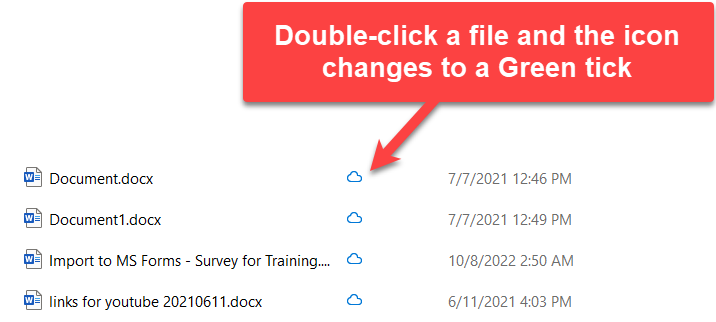
A blue cloud icon is an online-only file. It is not taking up any space on your device. To access a blue icon file, you need to download it, which requires an internet connection. After opening a blue cloud icon, it will automatically change to a Green tick icon. No internet access, you aren't downloading that file.
For example, a Word document has a blue icon. You need to access it. Double-click the file to download it, and Word opens. Work in the file or view it, then close it; now the file is locally available.

Green tick icons or green check mark
When you open an online-only file, the blue cloud icon is downloaded, becomes locally available, and changes to a green tick. This file takes up space on your computer, but it is available even without internet access.

Solid green circle with the white check mark
Always available on this device files will have a white check mark. Files will always stay on your computer unless you make them cloud-only. Unless Storage Sense runs, these files behave exactly like the green tick icon files.
With Storage Sense running, always available on this device, files will remain on your computer. Files with a green tick, Storage Sense running, and meeting the Storage Sense criteria will automatically be moved back to cloud-only files. Storage Sense is a great feature that helps your hard drive maintain available space.

Green check vs solid green circle difference
In day-to-day use, both green checked icons behave the same: the file is on your device and available offline. The difference matters only if you use Windows Storage Sense. Storage Sense can automatically free up space by turning locally available files (the outlined green check) back into online-only (blue cloud) files. It will not remove files marked with the solid green circle because those are pinned as always available.
 Chris Menard
Folder icons
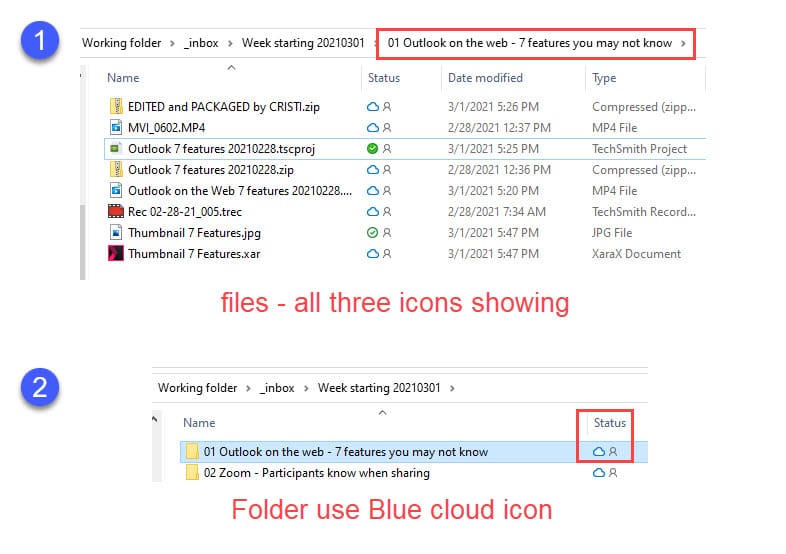
If a folder has all three icons showing, as in image 1 below, the folder will display the Blue cloud icon as the default, as seen in image 2 below. One important thing to remember is that just because you see the blue cloud for a folder doesn't mean all the files are cloud-only. If you have large files that have a check, they are on your local hard drive and may be taking up valuable space, depending on the size of your hard drive. To get all the files to be available in the cloud only, right-click the folder and select Free up space.
Folder with a Blue cloud
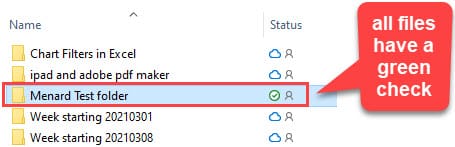
Folder with a green check mark
If everything in the folder is the same icon, for example, the green check mark, then the folder will show the green check mark.
Practical steps to free up local disk space
If your hard drive is running low on space, you can reclaim space without deleting anything from OneDrive. Here are simple steps I use:
- Open File Explorer and navigate to the OneDrive folder.
- Right-click files or folders you don’t need locally, then select Free up space. They change to the blue cloud and no longer take local disk space.
- To pin a file or folder to your device so it never gets removed, choose Always keep on this device. You’ll see the solid green circle.
Quick tips and common scenarios
- Moving a local file into OneDrive — if you drag a file from your PC into a OneDrive folder, it will default to a locally available file with a green check. If you don’t want it taking up space, right-click and choose Free up space.
- Shared files — a small person icon next to a file means it’s shared. Shared files can still be online-only or locally available, depending on their icon.
- Automatic cleanup — use Windows Storage Sense to automatically free up locally available files based on disk space thresholds or inactivity. Storage Sense will not touch files pinned with the solid green circle.
Popular Blog Post
 Chris Menard
 Chris Menard
 Chris Menard